When America's First Freelancers Got Wiped Out, They Built the Safety Net We Still Use Today
When America's First Freelancers Got Wiped Out, They Built the Safety Net We Still Use Today
The Uber driver with no health insurance, the DoorDash worker with unpredictable income, the freelance graphic designer wondering what happens when they get sick — none of these anxieties are new. In fact, they're nearly identical to concerns that gripped America 150 years ago, when the country's first massive gig economy collapsed overnight.
The Railroad Boom Created America's First Gig Workers
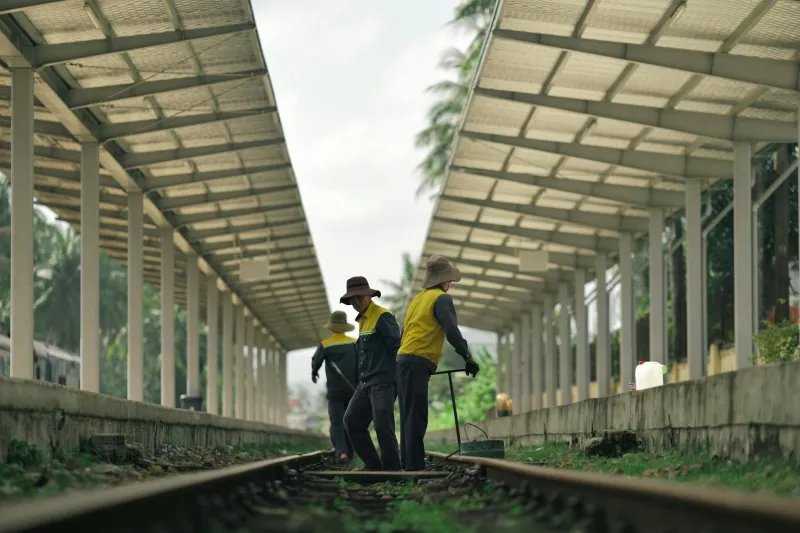
Between 1860 and 1873, railroad construction exploded across the American West. Unlike factory workers who showed up to the same building every day, railroad crews were fundamentally freelance: they moved from project to project, worked seasonally, and had no guarantee of steady employment. Track layers, bridge builders, surveyors, and equipment operators all worked on contracts that could end without notice.
 Photo: American West, via www.historyonthenet.com
Sound familiar? The railroad boom created the exact same employment structure as today's platform economy. Workers had flexibility and potentially higher pay, but zero security. When a railroad project finished, workers scattered to find the next job. When winter hit, construction stopped entirely. And when the economy turned south, there was no safety net.
The Panic of 1873 Exposed the Cracks
On September 18, 1873, the investment bank Jay Cooke & Company collapsed, triggering what historians call the Long Depression. Railroad construction — the engine driving America's gig economy — ground to a halt practically overnight.
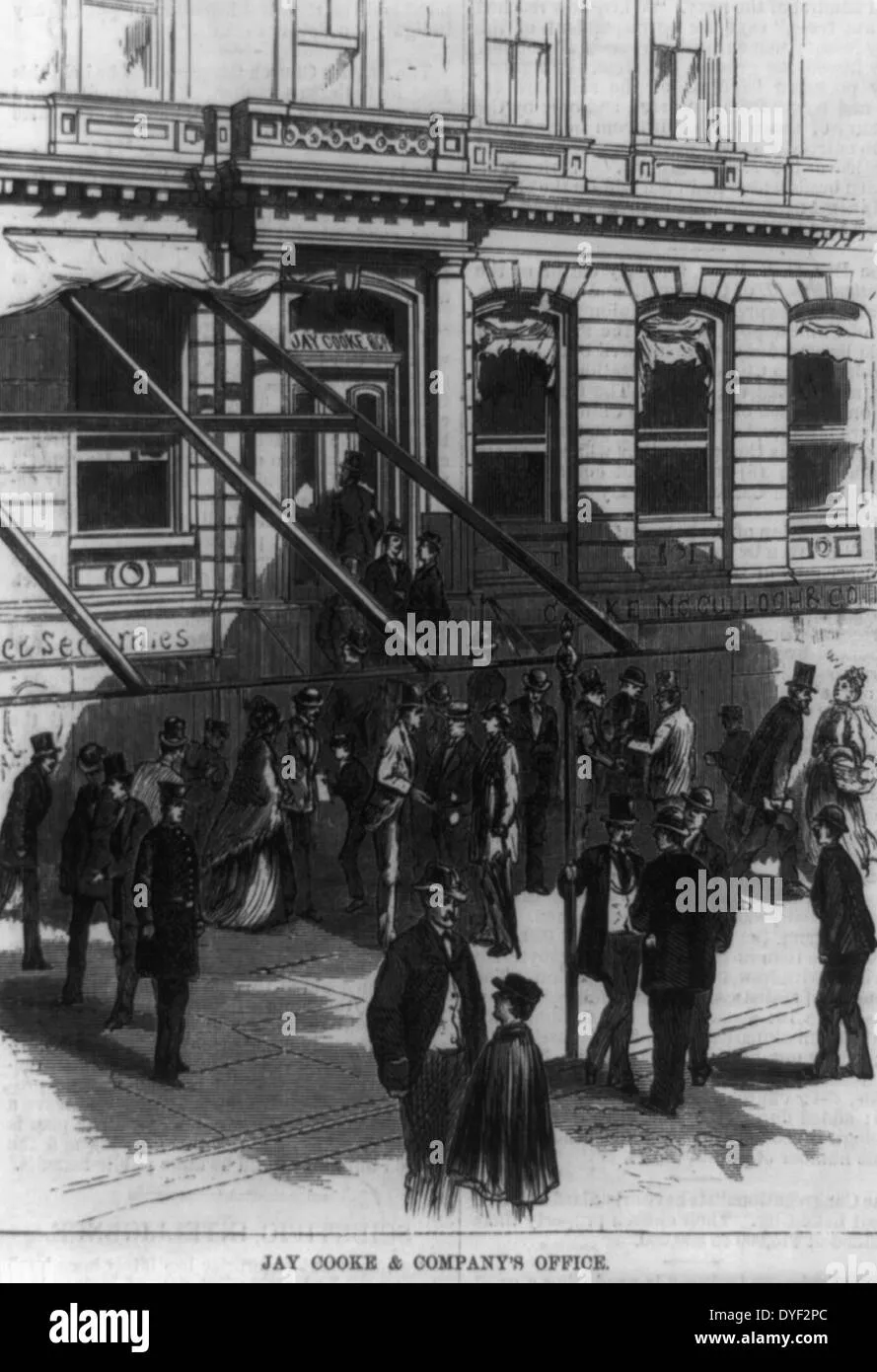 Photo: Jay Cooke & Company, via c8.alamy.com
Millions of contract workers found themselves stranded. Unlike factory employees who might get severance or at least advance notice, railroad crews were simply told to pack up and leave. Many were hundreds of miles from home, in remote construction camps, with no way to get back to family or find alternative work.
The parallels to 2020 are striking. When the pandemic hit, gig workers were among the first to lose income and the last to receive government assistance. They fell through the cracks of an unemployment system designed for traditional employees. The same thing happened in 1873, except there was no unemployment system at all.
Workers Built Their Own Solutions
Abandoned by employers and ignored by a government that barely acknowledged their existence, America's first gig workers did something remarkable: they built the foundation of the modern safety net themselves.
Railroad workers formed mutual aid societies — essentially insurance cooperatives where members paid in during good times and drew benefits during bad ones. These organizations, with names like the Brotherhood of Locomotive Engineers and the Order of Railway Conductors, created the first systematic unemployment benefits in American history.
 Photo: Brotherhood of Locomotive Engineers, via ble-t.org
The concept was simple but revolutionary. Instead of relying on charity or family support during economic downturns, workers pooled their resources to guarantee each other a basic income floor. Members who lost work could draw a weekly stipend while looking for their next job.
From Mutual Aid to Federal Policy
What started as desperate self-help among railroad workers gradually influenced national policy. The mutual aid societies proved that unemployment insurance was both practical and necessary. They also demonstrated that workers would contribute to such systems voluntarily if they trusted the management.
By the 1890s, several states were experimenting with public unemployment funds based directly on the railroad worker model. When the Great Depression hit in 1929, policymakers didn't have to invent unemployment insurance from scratch — they scaled up a system that gig workers had already tested and refined for 60 years.
The Social Security Act of 1935, which created federal unemployment benefits, explicitly referenced the "successful operation of similar systems" in private industry. Those private systems were the mutual aid societies that railroad workers built after 1873.
The Pattern Repeats
History suggests we're following the same script today. Just as 19th-century gig workers eventually forced society to acknowledge their needs, modern platform workers are already building their own solutions. Freelancers' unions, portable benefits startups, and worker cooperative platforms are all attempting to solve the same problems that railroad crews faced in 1873.
The difference is speed. It took 60 years for the railroad workers' innovations to become federal policy. Today's gig workers have access to technology, legal frameworks, and political organizing tools that could compress that timeline dramatically.
What the Railroad Workers Got Right
The most important lesson from 1873 isn't about specific policies — it's about strategy. The railroad workers succeeded because they focused on practical solutions rather than ideological arguments. They didn't waste time debating whether gig work was good or bad; they accepted it as reality and built systems to make it sustainable.
Modern gig workers who study this history tend to reach the same conclusion: the goal isn't to eliminate freelance work or force everyone into traditional employment. It's to build a safety net that works for people whose income varies unpredictably.
Every advanced economy eventually creates such a system. The railroad workers proved it could be done. The only question is how long we'll take to learn from their example.