The Geography of Collapse: When Romans Stopped Talking Across Party Lines, the Empire Fell Apart
Americans argue about whether we're more politically polarized than ever before. They're asking the wrong question. The real issue isn't how much we disagree — it's whether we're still disagreeing with each other or just with caricatures of people we never actually meet.
Rome faced this exact problem twice: once during the collapse of the Republic (133-31 BC) and again during the Crisis of the Third Century (235-284 AD). Both times, the warning signs weren't louder arguments but fewer arguments — not because people agreed more, but because they stopped talking to people who disagreed with them.
Political scientists call this "sorting," and it's different from polarization in crucial ways. Polarization means people disagree strongly but still interact. Sorting means people with different views stop sharing physical and social spaces. History shows that democracies can survive almost infinite polarization. They cannot survive sorting.
The Roman Blueprint for Democratic Collapse
During the late Republic, Roman politics followed a predictable geographic pattern. Populares (the "people's party") drew support from urban areas, recent immigrants, and economically struggling citizens. Optimates (the "best men") represented rural landowners, established families, and traditional Roman values.
This sounds like standard political competition, but the crucial detail is what happened next. By 100 BC, Romans increasingly lived, worked, and socialized only with political allies. Senators stopped attending dinners hosted by rivals. Merchants refused to trade across party lines. Even religious festivals became partisan gatherings.
The result wasn't more intense political debate — it was less. When Romans stopped encountering real humans who disagreed with them, they stopped understanding what their opponents actually believed. Political positions became increasingly extreme because there was no social cost to extremism within each tribe.
When Compromise Becomes Structurally Impossible
Sorting doesn't just make politics nastier — it makes functional governance impossible. Here's why: democratic institutions depend on politicians who disagree on policy but share basic assumptions about how the system should work. When political opponents become social strangers, those shared assumptions evaporate.
Roman senators during the Republic's final century faced this problem repeatedly. They couldn't negotiate compromises because they literally didn't understand what their opponents wanted. Each side assumed the other was acting in bad faith because they never saw evidence of good faith in their daily lives.
This pattern repeated during the Third Century Crisis. Roman elites had sorted themselves into regional networks that rarely overlapped. When military and economic pressures required coordinated responses, the Empire couldn't produce them. Not because Romans lacked good ideas, but because Romans with good ideas couldn't communicate with Romans who had power to implement them.
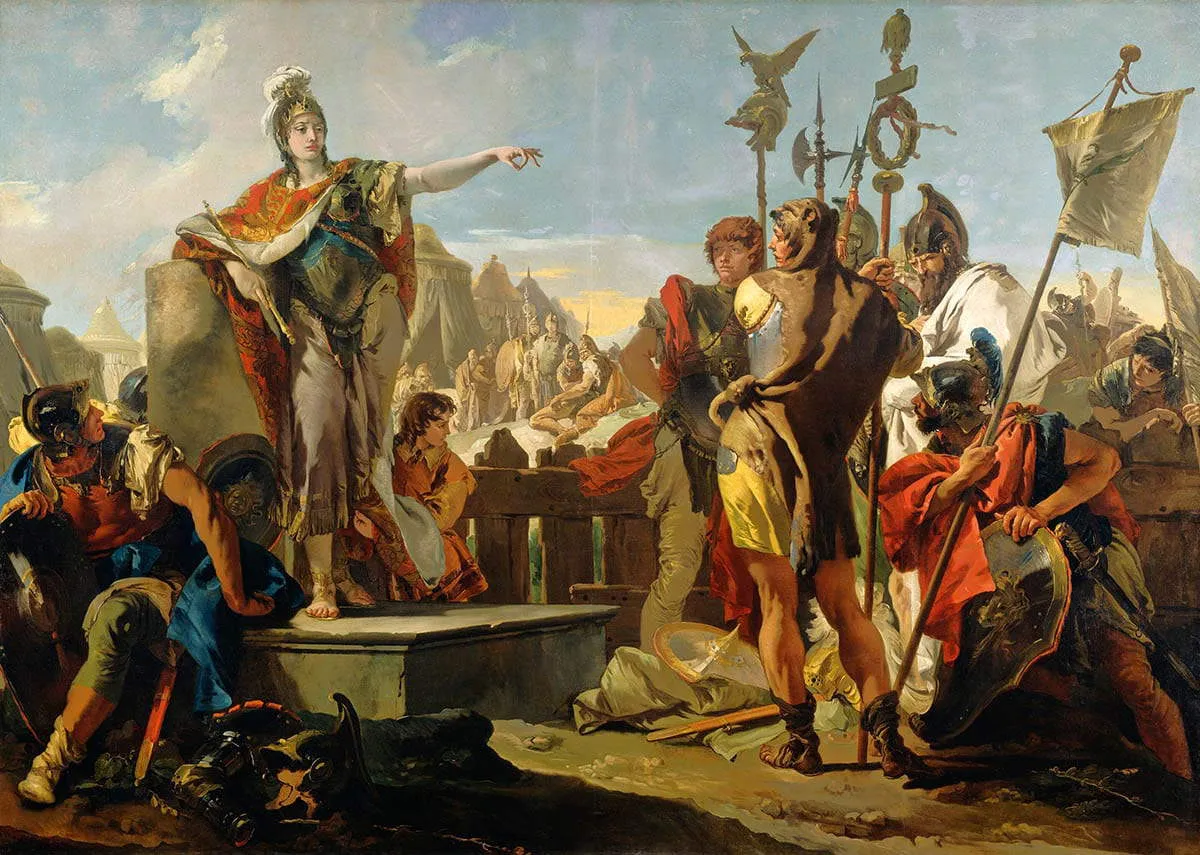 Photo: Third Century Crisis, via cdn.thecollector.com
The American Sorting Experiment
Contemporary American demographics show the same warning signs that preceded both Roman collapses. Since 1976, Americans have increasingly sorted themselves into politically homogeneous communities. The number of "landslide counties" — where presidential elections are decided by 20+ point margins — has tripled.
More telling: Americans increasingly work, shop, and socialize within political bubbles. Republicans and Democrats now prefer different restaurants, vacation destinations, and even grocery stores. This isn't just correlation — it's active choice. Americans are unconsciously recreating the social segregation that made Roman compromise impossible.
The psychological mechanism is identical across both civilizations. When people rarely encounter genuine representatives of opposing viewpoints, they develop increasingly inaccurate models of what their opponents believe. These inaccurate models make compromise seem pointless ("they're too extreme to reason with") or impossible ("they want to destroy everything we value").
Which Institutions Fail First
Roman history provides a precise roadmap for how sorting destroys democratic institutions. The sequence is remarkably consistent across both collapses:
First, informal norms break down. Politicians stop following unwritten rules about civility, procedure, and fair play. This happened in Rome around 133 BC and again around 235 AD.
Second, legislative bodies become unable to pass routine business. Not because of policy disagreements, but because representatives can't agree on basic procedural questions. Roman Senate productivity collapsed decades before the Republic ended.
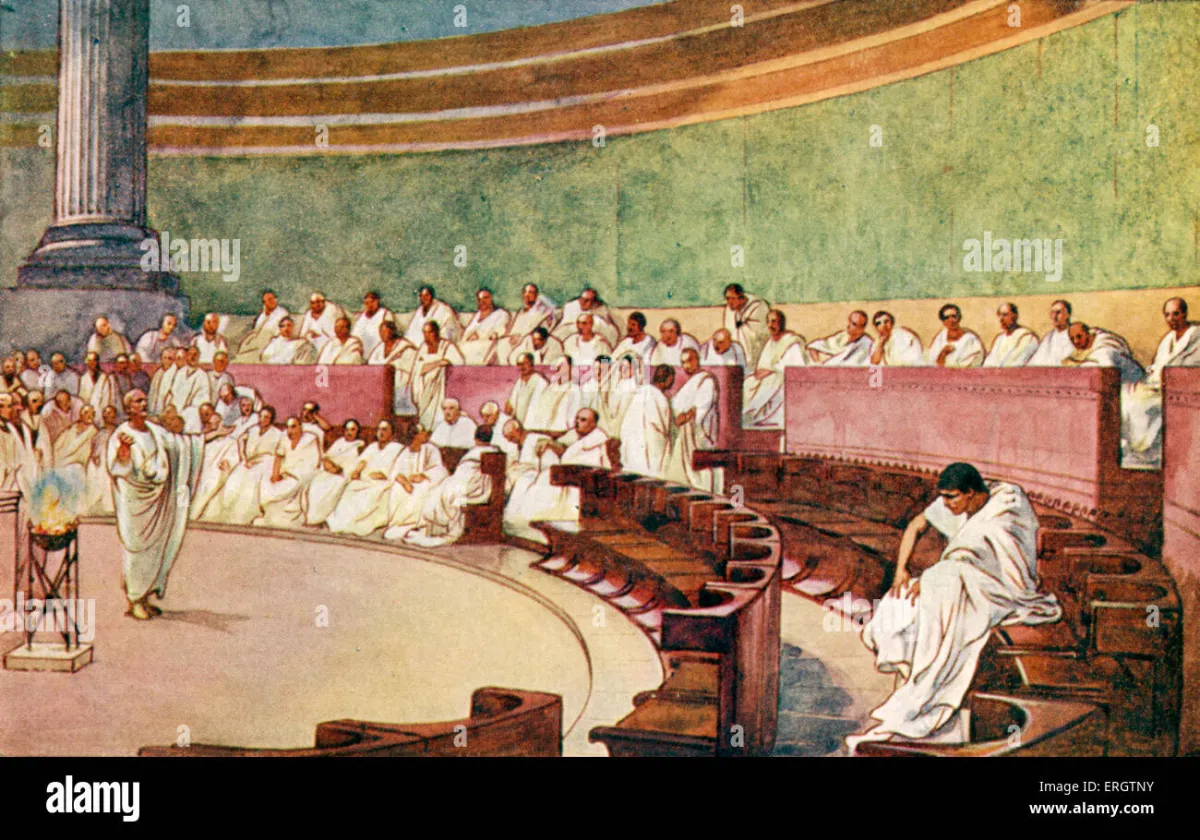 Photo: Roman Senate, via c8.alamy.com
Third, executive power expands to fill the legislative vacuum. Roman consuls, then generals, then emperors accumulated authority not through coups but through legislative dysfunction. Someone has to keep the government running when normal processes break down.
Fourth, regional governments begin ignoring central authority. This isn't rebellion — it's practical necessity when central institutions become unreliable.
The Point of No Return
Roman evidence suggests sorting becomes irreversible when it reaches about 60-70% geographic segregation — when that percentage of citizens live in politically homogeneous communities. America crossed that threshold sometime around 2004.
But the timeline isn't deterministic. Roman sorting took different amounts of time to produce collapse depending on external pressures. The Republic fell faster because it faced simultaneous military, economic, and social crises. The Empire during the Third Century had more resources and survived longer despite similar sorting patterns.
The key variable isn't the degree of sorting but the presence of cross-cutting identities — relationships that bridge political divides. Romans who maintained business partnerships, family connections, or social ties across party lines could still broker compromises. When those relationships disappeared entirely, so did functional governance.
What History Actually Predicts
The Roman precedent doesn't predict American civil war or governmental collapse. It predicts something potentially worse: the gradual replacement of democratic institutions with more efficient but less representative alternatives.
Romans didn't choose authoritarianism — they drifted into it because sorted populations couldn't make democratic institutions work. The emperors weren't conquerors but problem-solvers, offering stability that dysfunctional republican government couldn't provide.
American sorting creates identical pressures toward institutional workarounds that bypass normal democratic processes. Executive orders, judicial activism, and bureaucratic rule-making all expand when legislatures can't function. Each workaround makes the next one easier to justify.
The historical lesson isn't that democracy is doomed — it's that democracy requires citizens who regularly interact with people they disagree with. When that interaction stops happening naturally, it has to happen intentionally, or it stops happening at all.