The Outsider Who Becomes the Insider: America's 40-Year Reform Trap
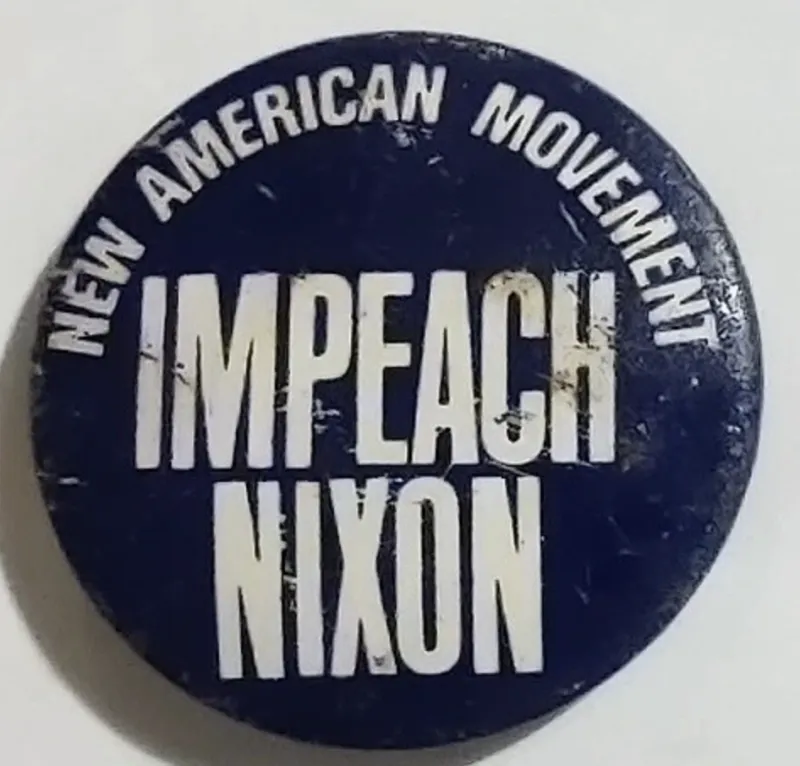
Photo: New American Movement, Public domain, via Wikimedia Commons
The Outsider Who Becomes the Insider: America's 40-Year Reform Trap
Let's play a game. A candidate runs for president on a platform of dismantling entrenched elite power, speaking directly to working people who feel left behind by a rigged system. He wins in an upset. He then proceeds to consolidate executive authority, reward his loyalists with government positions, crush his political enemies using the machinery of the state, and build a new establishment that looks remarkably like the old one — except with different people at the top.
You're thinking of someone specific right now. You might be wrong about which someone.
That description fits Andrew Jackson in 1828. It fits aspects of Teddy Roosevelt's second term. It fits Woodrow Wilson's progressive administration, which managed to be simultaneously reformist and aggressively authoritarian. It fits the arc of more recent presidencies than most people are comfortable acknowledging. The names change. The shape of the story doesn't.
 Photo: Theodore Roosevelt, via boundarystones.weta.org
 Photo: Andrew Jackson, via d1y822qhq55g6.cloudfront.net
Why Outsiders Keep Becoming Insiders
The standard explanation for this pattern is moral: the reformer got corrupted. Power does that. They went to Washington with good intentions and Washington ate them. This explanation is satisfying because it's a story about character, and Americans love stories about character.
It's also probably wrong — or at least, it's incomplete in a way that matters.
The more accurate explanation is structural, and it's been visible in the historical record for long enough that it should be embarrassing we keep missing it. When an outsider takes power, they inherit an apparatus. The apparatus has to run. Running it requires people who know how to run it, which means either keeping some of the old operators or replacing them with new people who quickly learn to operate the same levers the same way. The levers don't change. The building doesn't change. The incentives built into every office don't change.
Jackson came to Washington promising to clear out the entrenched Eastern elite and return power to ordinary Americans. He did clear out the elite — and replaced them with his own people through what became known as the spoils system, a patronage machine more systematic and more nakedly transactional than anything his predecessors had built. He didn't dismantle the apparatus. He reprogrammed it to serve different masters, who then became the new establishment.
This isn't unique to America, and it isn't unique to democracy. The historical record from Rome is particularly instructive. The late Republic went through multiple cycles of populist reformers — the Gracchi brothers, Marius, eventually Caesar — each of whom rode genuine popular anger at genuine elite corruption, and each of whom, upon gaining power, either became the thing they'd fought or was destroyed trying not to. The structural incentives of running a complex state are stronger than the intentions of whoever runs it.
The 40-Year Clock
What's specifically American about this pattern is the timing. The cycles aren't random. They cluster around generational intervals — roughly 35 to 45 years — which maps onto something the historian William Strauss and others have documented: the time it takes for a new establishment to become old enough, comfortable enough, and tone-deaf enough to generate the next wave of genuine outsider energy.
Jackson's revolution crystallized in 1828. The progressive reform wave peaked around 1912 — about 84 years, or two cycles. The New Deal reform era peaked in 1936. The Reagan revolution, which was explicitly framed as dismantling the New Deal establishment, peaked in 1980 — 44 years later. Each wave produces a genuine outsider who wins, builds a new establishment, and eventually becomes the thing the next wave runs against.
The psychology here isn't complicated, and you don't need a controlled experiment to understand it. Every generation experiences the existing power structure as permanent, natural, and slightly corrupt. Every generation experiences its own preferred reformers as fresh, authentic, and genuinely different. Both perceptions are partly true and mostly wrong. The establishment really is somewhat corrupt. The reformers really are somewhat different. But the structural pressures of actually governing reliably overwhelm the differences over time.
The Rare Exceptions
This is where the history gets genuinely interesting, because the cycle isn't perfectly unbroken. There are cases where reformers actually changed the underlying structure rather than just changing who sat inside it — and the cases share some specific features worth examining.
The most durable American reform era was probably the Progressive period's legislative output from roughly 1906 to 1916: direct election of senators, the Federal Reserve, the income tax, antitrust law. These reforms lasted not because the reformers were more virtuous than Jackson or Caesar, but because they targeted the rules rather than the rulers. They changed what the apparatus could do, not just who operated it.
The contrast with Jackson is almost too clean. Jackson changed the people. The progressives changed the laws. A generation later, Jackson's people had become the new establishment. A century later, the progressive-era laws are still largely in place.
The historical pattern suggests that reform movements which focus on personnel — throw the bums out, replace them with our bums — reliably produce the cycle. Reform movements that focus on structural rules, and that manage to get those rules institutionalized before the reformers themselves gain enough power to start bending them, have a meaningfully better track record.
What This Means Right Now
The uncomfortable implication of all this is that the question "is this outsider candidate the real thing?" is probably the wrong question. Human psychology hasn't changed enough in 200 years of American political history for any individual's authenticity to matter as much as the structural pressures they'll face once they win.
The better questions are older and less exciting: What specific rules are they proposing to change? Which of those rule changes would constrain their own power as well as their opponents'? And — the hardest one — are their supporters willing to hold them to those constraints once they're in office, or will the tribal loyalty that elected them also protect them from accountability?
Every generation thinks it finally found the real outsider. The record is pretty clear on what happens next. The question is whether knowing the pattern changes anything — or whether the psychological pull of the reform narrative is strong enough to run the same cycle one more time regardless.
History, characteristically, is not optimistic on that last point.