The Build Trap: How Great Powers Engineered Their Own Obsolescence
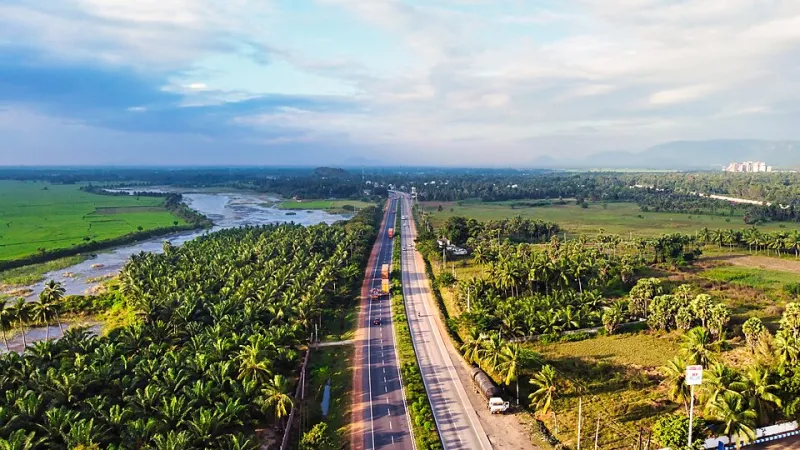
Photo: iMahesh, CC BY-SA 4.0, via Wikimedia Commons
Rome's aqueducts were an engineering miracle. At the height of the empire, eleven major aqueduct systems delivered roughly 300 gallons of fresh water per person per day to the city of Rome — more than many modern cities manage. They were the foundation of Roman urban life: the bathhouses, the fountains, the dense apartment blocks that required running water to be habitable. The empire built its population density, its public health, and its political culture around the assumption that the aqueducts would always flow.
When the Visigoths sacked Rome in 410 and the Vandals cut the aqueducts in 537, the city didn't just lose its water supply. It lost the physical precondition for being a large city. Rome's population collapsed from roughly a million people to somewhere between 20,000 and 50,000 within two centuries — not primarily because of violence, but because the infrastructure that made dense urban life possible was gone, and rebuilding it was beyond the capacity of whoever was left. The city had been built for the aqueducts. Without them, most of it simply couldn't function.
This is the infrastructure curse. And it has a longer track record than almost any other pattern in the historical record.
The Curse Has a Structure
The pattern works in three phases, and it's consistent enough across civilizations that it's worth laying out explicitly.
Phase one: a civilization solves a real problem with a massive infrastructure investment. The investment works. It accelerates growth, expands capacity, and generates genuine prosperity. This part of the story is usually what gets remembered — the aqueducts, the canals, the railroads, the interstates.
Phase two: the civilization organizes itself around the infrastructure. Settlement patterns shift. Economic models form around the new network. Political constituencies develop that depend on the infrastructure's continuation. At this point, the infrastructure isn't just serving the civilization — it's shaping it. The assumptions baked into the infrastructure become the assumptions baked into everything built on top of it.
Phase three: the world changes. New technologies emerge, or old assumptions about trade routes or energy or population density stop holding. The infrastructure that was built to solve yesterday's problem is now an obstacle to solving today's problem — but it's so deeply embedded, so load-bearing for everything built around it, that abandoning or substantially modifying it is politically and economically catastrophic. So it doesn't get abandoned. It gets maintained, subsidized, and defended long past the point where a fresh-eyed civilization would have moved on.
Britain's Canal Moment
The British canal network is one of the cleaner examples in the historical record, partly because it happened fast enough to be well-documented and the counterfactual is visible.
Between roughly 1760 and 1830, Britain built an extraordinary inland waterway system — about 4,000 miles of navigable canals that connected industrial centers to ports and transformed the economics of moving bulk goods. The canal network was the circulatory system of the early Industrial Revolution. It made the industrial Midlands possible. Fortunes were built on canal shares. Towns grew up around canal junctions. The entire economic geography of industrial England reorganized itself around the assumption that canals were the future of freight.
Then the railways came. By the 1840s, it was obvious that rail was faster, cheaper for most freight, and capable of serving areas canals couldn't reach. A civilization without sunk costs would have pivoted immediately. Britain did pivot — eventually — but the canal interests fought the railways for decades, extracting subsidies, legal protections, and regulatory advantages that slowed the transition and left Britain with a hybrid system that served neither technology particularly well during the transition period.
The canal investors weren't stupid or uniquely corrupt. They were behaving exactly as anyone with a massive asset suddenly facing obsolescence would behave. The problem wasn't the people. It was that the infrastructure had created constituencies whose rational self-interest was now misaligned with the national interest — and those constituencies had enough political weight to slow the adaptation.
The Interstate's Hidden Cost
America's Interstate Highway System is one of the genuine engineering achievements of the twentieth century. Authorized in 1956 under Eisenhower — who'd been partly inspired by Germany's autobahn network and partly by the logistical nightmare of moving military equipment across the country in World War II — the interstate system transformed American economic geography within a generation.
 Photo: Interstate Highway System, via s.hdnux.com
It also locked in a set of assumptions about energy, land use, and urban form that are proving extraordinarily expensive to revisit.
The interstate system was designed for cheap oil, low-density suburban development, and a manufacturing economy that moved goods by truck. All three of those assumptions have shifted substantially since 1956. The system that made sense then — wide highways connecting dispersed suburbs to distant factories — is a poor fit for an economy increasingly organized around dense urban knowledge work and e-commerce logistics. Retrofitting it is expensive. Replacing it with something better suited to current conditions would be almost incomprehensibly expensive. So it gets maintained, expanded at the margins, and treated as a permanent feature of the landscape rather than a 70-year-old solution to a 70-year-old problem.
This isn't an argument against the interstates. It's the same argument you could have made about Roman aqueducts in 400 CE — they were a genuine achievement, they were worth building, and the civilization that built them was right to be proud of them. The problem wasn't building them. The problem was forgetting that they were a solution to a specific historical moment, not an eternal feature of civilized life.
The Real Risk
The standard American debate about infrastructure is about quantity: are we spending enough? The bridges are crumbling, the roads have potholes, the power grid is aging. All of that is true. But the historical record suggests the more dangerous question isn't how much we're spending — it's what we're building and whether we're building it at a scale and in a form that will lock the next generation into our current assumptions the way the interstate locked us into 1956's.
Every major infrastructure investment is also a bet on the future. The Romans bet on dense urban settlement. The British canal investors bet on water freight. The Eisenhower administration bet on cheap oil and the private automobile. Some of those bets paid off for a long time. None of them paid off forever.
The civilizations that navigated infrastructure transitions best weren't the ones that built the most or the ones that spent the least. They were the ones that built modularly enough to adapt — that avoided becoming so dependent on any single system that losing it meant losing everything.
Rome couldn't unbuild its aqueducts when the empire started fragmenting. Britain couldn't easily unwire its canal economy when the railways arrived. America can't easily unwind 70 years of suburban development patterns and highway dependency.
But it can, at least, build the next thing with enough self-awareness to ask: what happens if we're wrong about this one too? The record suggests that question is worth asking before the concrete sets.