The Housing Crisis Has Been Declared an Emergency Nine Times. The One Fix That Worked Got Cancelled.
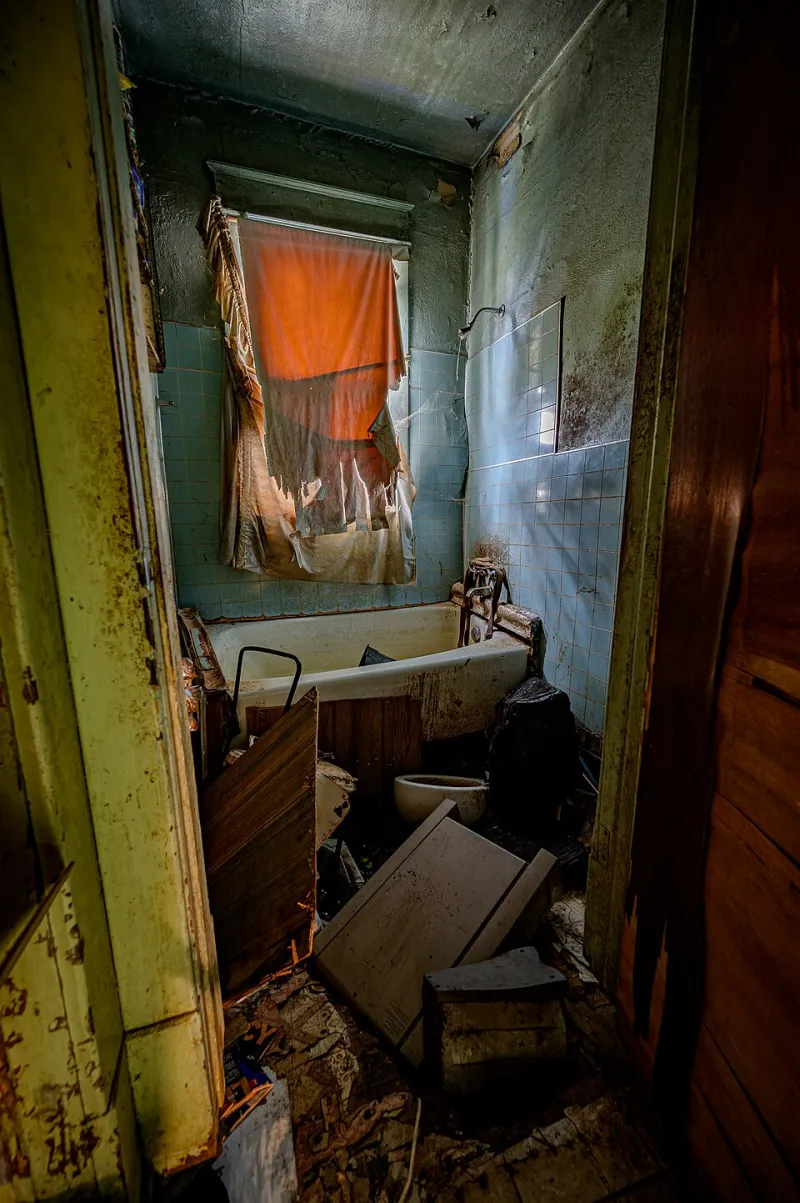
Photo: City of Greenville, North Carolina, Public domain, via Wikimedia Commons
Somewhere in a government archive, there is almost certainly a congressional report from the 1890s using the phrase "housing crisis." There is definitely one from the 1930s, and the 1940s, and the 1960s, and the 1980s, and the 2000s, and the 2010s, and right now. The language barely changes. The urgency is always genuine. The solutions are always announced with confidence. And the crisis always comes back.
This is not a coincidence, and it is not a mystery. It is a pattern with enough historical repetitions that you can start to reverse-engineer what's actually going on — not with housing markets, but with the political will to actually fix them.
The Tenement Era and the First Official Emergency
The post-Civil War industrial boom packed workers into American cities faster than private housing markets could accommodate them. By the 1870s, New York's Lower East Side had population densities comparable to the most crowded neighborhoods in the world. The tenement — a multi-story building subdivided into the smallest rentable units the law permitted, with minimal light, ventilation, or sanitation — became the default housing type for the urban working class.
 Photo: New York's Lower East Side, via www.tripsavvy.com
The first formal housing emergency declaration came in the 1890s, following Jacob Riis's photographic documentation of tenement conditions in How the Other Half Lives. The policy response was building codes: minimum room sizes, required windows, fire egress standards. These were genuine improvements. They were also almost immediately neutralized by the economics of land scarcity. Developers built to code, charged more for compliant units, and lower-income tenants ended up in older non-compliant stock or moved further out. The crisis didn't end. It migrated.
 Photo: Jacob Riis, via seeoldnyc.com
Public Housing and the Mid-Century Bet
The New Deal and post-WWII period produced the most ambitious federal intervention in housing history. The Public Housing Act of 1937 and the Housing Act of 1949 together authorized the construction of hundreds of thousands of units of government-owned, income-restricted housing. The ambition was real: if the private market couldn't house the poor, the government would.
For roughly fifteen years, it worked — unevenly, and with enormous racial injustice baked into site selection and tenant assignment, but in terms of raw unit counts and cost-to-income ratios, public housing measurably housed people who couldn't otherwise afford city living.
Then the funding model broke. Congress authorized units without adequately funding maintenance. Political pressure concentrated public housing in the least-desirable urban locations, away from the neighborhoods whose residents had the most political power. By the 1970s, Pruitt-Igoe in St. Louis and Cabrini-Green in Chicago had become national symbols of policy failure. The demolitions began in 1972 and continued for decades. The units they replaced were never rebuilt.
The crisis, which had been partially suppressed, returned in full.
The Zoning Era: Solving Overcrowding by Banning Density
Mid-century America ran two simultaneous housing policy tracks that directly contradicted each other. Federal programs were trying to house urban workers. Local governments — primarily suburban municipalities — were simultaneously enacting zoning codes designed to prevent the kind of density that made affordable housing economically viable.
Single-family zoning, minimum lot sizes, parking requirements, setback rules — these were not incidental features of postwar suburban development. They were deliberate mechanisms for controlling who could afford to live where. The effect was to externalize housing costs: federal subsidies helped middle-class families buy suburban homes while the zoning codes those communities then enacted made it structurally impossible for lower-income families to follow.
This is the period in which the modern housing crisis acquires its distinctive shape. It's not just a market failure. It's a market failure actively maintained by a legal architecture that prevents the supply response that markets would otherwise produce.
Section 8, Mortgage Subsidies, and the Management Strategy
By the 1970s and 80s, the federal approach had shifted from building housing to subsidizing demand. Section 8 vouchers, introduced in 1974, gave eligible low-income households a subsidy to rent on the private market. The mortgage interest deduction, which had existed since 1913 but became increasingly valuable as homeownership and tax rates both rose, functioned as a massive housing subsidy for middle- and upper-income homeowners.
Both programs are still operating. Neither has bent the affordability curve. Section 8 vouchers work for the households that receive them — and there are never enough of them. Nationally, only about one in four households eligible for federal housing assistance actually receives it. The mortgage interest deduction primarily benefits households wealthy enough to itemize deductions and expensive enough to have large mortgages. As a housing policy, it is a subsidy for people who need housing help least.
These are demand-side interventions in a supply-constrained market. They increase purchasing power without increasing units. In a market with restricted supply, that primarily means higher prices.
The One Time It Actually Worked
Here is the uncomfortable part of the record.
Between roughly 1945 and 1960, American housing affordability improved significantly and durably — not just for the middle class but across a broad income range. The homeownership rate climbed from 44 percent in 1940 to 62 percent by 1960. Rent-to-income ratios fell. Housing quality improved. This is the only sustained period in the post-Civil War record where the affordability trend moved in the right direction for more than a decade.
What was different? Several things converged simultaneously, and disentangling them is genuinely difficult. But the factor that stands out in the historical record — and that subsequent policy has most consistently refused to replicate — is supply. The postwar period produced an enormous, sustained increase in housing units, driven by federal mortgage guarantees that made construction financing accessible, by the opening of suburban land to development, and by a building industry operating at industrial scale.
The supply increase was real, sustained, and geographically broad. It was also achieved through mechanisms — federally guaranteed mortgages, subsidized infrastructure for new developments, relaxed building standards for the GI Bill era — that were explicitly temporary and that were wound down as soon as the immediate crisis passed.
And critically: the supply expansion was racially exclusionary in ways that concentrated its benefits among white households and laid the groundwork for the wealth inequality that shapes housing markets today. The one intervention that measurably worked was also one of the most consequential instruments of structural racism in American domestic policy. That's not a footnote. It's central to why the model hasn't been replicated — and why a clean replication wouldn't be appropriate.
What the Pattern Reveals
Nine cycles of declared emergency. Eight policy responses that suppressed the symptoms without resolving the structure. One intervention that genuinely bent the curve, achieved through a combination of massive supply expansion and explicit exclusion that makes it both the clearest model and the most morally complicated one in the record.
What does that pattern tell us?
It tells us that housing affordability is not primarily a technical problem. The economics of housing markets are reasonably well understood. The interventions that increase supply, reduce exclusionary zoning, and align subsidy with production rather than consumption are documented. They are not mysteries.
What the record actually shows is that affordable housing for low-income Americans has never been a problem the political system was organized to solve. It has been a problem the political system was organized to manage — to keep below the threshold of acute crisis, to generate visible policy activity, and to avoid the direct confrontation with existing property owners and zoned-out municipalities that actual supply expansion would require.
Every generation declares an emergency. Every generation implements a program. And every generation, roughly thirty years later, the emergency is back.
The history of American housing policy is not primarily a story of trying and failing. It's a story of knowing and choosing. The record is right there for anyone who wants to read it.