When Doctors Created the First Opioid Epidemic, They Blamed Everyone But Themselves
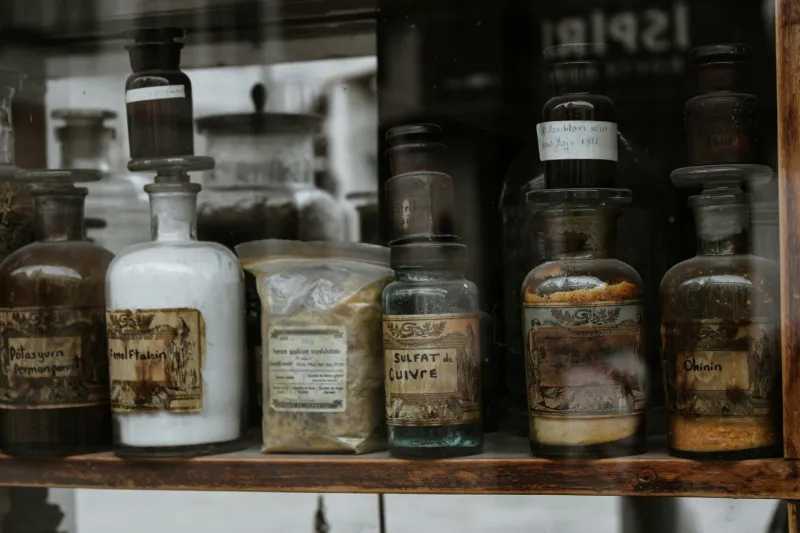
The Original Opioid Crisis Was Just as Deadly
In 1885, a Chicago physician named J.B. Mattison published a paper that should have been a wake-up call. He documented over 200 cases of morphine addiction among his patients, most of whom had started taking the drug for legitimate medical reasons. "The habit is gaining fearful ground among all classes," he wrote, "and the curse is by no means confined to the so-called dangerous classes."
Mattison wasn't describing some distant future crisis. He was documenting America's first opioid epidemic — one that would rage for decades and kill hundreds of thousands of people before anyone figured out how to stop it.
The parallels to today's fentanyl crisis aren't just striking; they're practically identical. Same pharmaceutical industry tactics. Same regulatory failures. Same political finger-pointing. Even the same corporate talking points, word for word.
Human psychology hasn't changed in 150 years. Neither has corporate greed.
How Victorian Big Pharma Hooked America
Morphine became widely available in the United States after the Civil War, when battlefield medics discovered its incredible power to numb pain. But unlike today's controlled substances, morphine was completely unregulated. You could buy it at any pharmacy, no prescription required.
Pharmaceutical companies — yes, they existed in the 1870s — immediately saw dollar signs. They began marketing morphine-laced "patent medicines" with names like Mrs. Winslow's Soothing Syrup and McMunn's Elixir of Opium. The advertising copy reads like a parody of modern pharma marketing: "Cures all pain instantly!" "Safe for children!" "Recommended by physicians!"
Companies like Parke-Davis (which still exists today as part of Pfizer) aggressively marketed morphine to doctors, providing free samples and sponsoring medical conferences. They funded research that downplayed addiction risks and published studies claiming their formulations were "non-habit forming."
Sound familiar? It should. Purdue Pharma used nearly identical tactics to push OxyContin in the 1990s, right down to the "non-addictive" marketing claims and the physician kickback programs.
The Addiction Explosion Nobody Saw Coming
By 1895, an estimated 300,000 Americans were addicted to morphine — roughly equivalent to 2.4 million people today, adjusting for population. The addiction rate among middle-class white women was particularly shocking, since they were the primary consumers of patent medicines marketed for "female complaints" and "nervous disorders."
Doctors were prescribing morphine for everything: headaches, menstrual cramps, coughs, insomnia, anxiety. Many physicians were addicted themselves — medical schools didn't teach about addiction risks because the pharmaceutical companies funding those schools insisted the drugs were safe.
The death toll mounted quietly. Unlike today's overdose crisis, Victorian morphine deaths were often classified as "heart failure" or "respiratory distress." Families covered up addiction deaths to avoid social stigma. The true scale of the epidemic only became clear decades later when researchers started digging through old medical records.
This pattern — widespread addiction hidden by social shame and medical euphemisms — persisted well into the 20th century. We're seeing it again today with fentanyl, where overdose deaths are often misreported or underreported in rural communities.
The Blame Game: Same Script, Different Century
As the morphine crisis deepened, the same finger-pointing began that we see in every modern drug epidemic. Pharmaceutical companies blamed "weak-willed patients" who "abused" their products. Doctors blamed pharmaceutical companies for misleading marketing. Politicians blamed immigrants and the poor, claiming addiction was a moral failing concentrated in "undesirable" populations.
The reality, documented in medical journals from the period, was more complex. Addiction cut across all social classes, but wealthy addicts could afford private treatment while poor addicts ended up in asylums or prisons. Middle-class women, who made up the largest group of morphine addicts, were often quietly maintained on the drug by family physicians to avoid scandal.
This class-based response to addiction — treatment for the wealthy, punishment for the poor — became the template for American drug policy. We're still using it today.
What Actually Worked (And What Made Things Worse)
The Victorian morphine epidemic finally began to recede in the early 1900s, but not because of any single policy intervention. Instead, a combination of factors gradually reduced both supply and demand:
Regulation that worked: The 1906 Pure Food and Drug Act required pharmaceutical companies to list morphine content on product labels. Sales plummeted when consumers could see exactly what they were buying.
Medical education: Medical schools began teaching about addiction as a disease rather than a moral failing. Doctors started prescribing morphine more carefully and monitoring patients for signs of dependence.
Alternative treatments: New pain medications like aspirin provided effective alternatives to morphine for many conditions.
What didn't work: Criminalization and moral crusades. States that focused on arresting users and dealers saw addiction rates stay high or even increase. Prohibition-style enforcement simply drove the market underground without addressing underlying demand.
The most successful interventions combined regulation, education, and medical alternatives — exactly the approach that modern addiction specialists recommend for today's opioid crisis.
The Lessons We Keep Forgetting
The Victorian morphine epidemic offers a clear blueprint for addressing today's opioid crisis, but we keep ignoring the historical lessons:
- Pharmaceutical companies will always prioritize profits over patient safety unless forced to do otherwise by regulation
- Criminalizing addiction doesn't reduce addiction; it just makes treatment harder
- Medical education about addiction must be mandatory and ongoing
- Alternative treatments must be available and affordable
- Recovery takes time and requires sustained support
Most importantly, the historical record shows that opioid epidemics don't end because people suddenly develop stronger willpower. They end when the systems that created them are fundamentally changed.
We ended the morphine epidemic once before. The playbook still works — if we're willing to use it.