The Prosperity Trap Nobody Sees Coming
In 150 AD, Rome's middle class was the envy of the ancient world. Merchants owned suburban villas, artisans sent their children to rhetoric schools, and middle-tier government officials could afford slaves and summer homes. By 250 AD, that middle class had essentially disappeared, leaving only the super-wealthy and everyone else.
Sound familiar? It should. The same prosperity-to-poverty pipeline has run in at least four major civilizations, and each time the middle class thought they were different. Each time, they were wrong.
The pattern isn't a mystery — it's documented in tax records, property deeds, and contemporary accounts. What makes it terrifying is how predictable it is, and how closely modern America is following the script.
Rome: When Real Estate Ate Everything
Roman middle-class prosperity was built on small business ownership, skilled trades, and moderate property holdings. For three centuries, this system worked beautifully. Then housing costs started rising faster than incomes.
Initially, this seemed like good news. Middle-class Romans owned property, so rising values made them feel wealthier. They borrowed against their homes to expand businesses, fund their children's education, and maintain their lifestyle. Credit was cheap and widely available.
The problem was that new middle-class formation stopped. Young Romans couldn't afford to buy homes or start businesses. They became renters and employees instead of owners and entrepreneurs. The middle class began recruiting only from itself, shrinking each generation.
By 200 AD, most middle-class Romans were house-poor, carrying debt loads that consumed most of their income. When economic disruption hit — inflation, supply chain problems, political instability — they couldn't weather the storm. They sold their property to wealthy investors and joined the ranks of the working poor.
The wealthy, meanwhile, had been converting their liquid wealth into hard assets. They bought up the distressed properties, consolidated small businesses, and emerged from the crisis controlling a much larger share of the economy.
Song China: The Innovation Paradox
Eleven centuries later, Song Dynasty China created the world's most sophisticated middle class. Urban merchants, skilled craftsmen, and lower-level bureaucrats enjoyed unprecedented prosperity. China led the world in technology, art, and commerce.
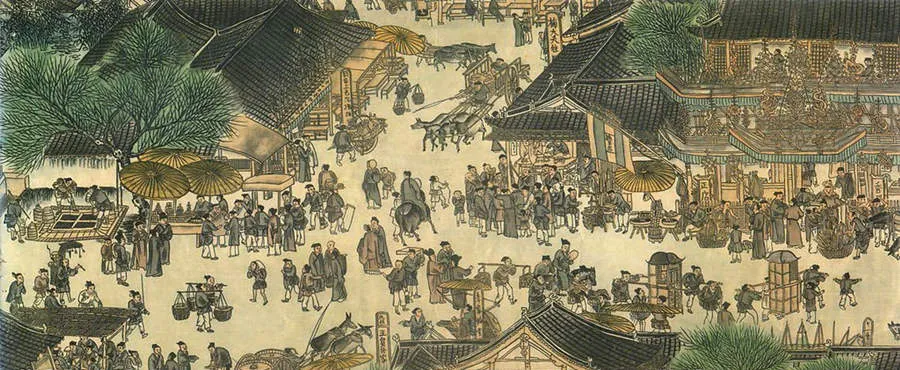 Photo: Song Dynasty China, via www.easytourchina.com
The Song middle class made the same mistake as Rome: they confused asset appreciation with wealth creation. Property values soared, especially in major cities like Kaifeng and Hangzhou. Middle-class families borrowed heavily to buy homes and businesses, confident that rising values would cover the debt.
But the real economy couldn't support the asset prices. Most middle-class wealth existed only on paper. When the Jin Dynasty invaded in 1127, the asset bubble collapsed overnight. Middle-class Song Chinese discovered their "wealth" had been an accounting fiction.
Those who survived the invasion found themselves in a fundamentally different economy. The new rulers favored large landowners and wealthy merchants who could provide immediate resources. Small business owners and skilled workers — the backbone of Song prosperity — were squeezed out.
The Dutch Republic: Financial Innovation's Dark Side
The Dutch invented modern capitalism, and for a century their middle class was the wealthiest in Europe. Amsterdam merchants, skilled artisans, and professional managers built a society where ordinary people could accumulate significant wealth through work and investment.
Then came financial innovation. The Dutch developed sophisticated credit markets, investment instruments, and speculative opportunities. Middle-class families began treating their homes and businesses as investment vehicles rather than productive assets.
The tulip mania of 1637 was just the beginning. For decades afterward, Dutch middle-class families chased returns through increasingly complex financial schemes. They borrowed to invest, then borrowed against their investments to invest more.
When the speculative economy finally collapsed in the 1670s, it took the middle class with it. The merchants and financiers who had created the bubble were positioned to buy assets at fire-sale prices. The middle-class investors who had believed in the system lost everything.
Weimar Germany: Democracy's Last Stand
Weimar Germany's middle class thought democracy would protect them. For a brief period in the 1920s, they were right. German engineers, teachers, shop owners, and civil servants enjoyed rising incomes and social mobility.
But the same dynamics were already in motion. Housing costs consumed larger portions of middle-class budgets. Young Germans couldn't afford to start businesses or buy homes. Credit expansion allowed middle-class families to maintain their lifestyle through borrowing.
When hyperinflation hit in 1923, then depression in 1929, the German middle class discovered they had no financial resilience. Their savings were worthless, their debts were crushing, and their political system couldn't protect them from economic reality.
The wealthy had converted their assets to foreign currencies and hard goods. They emerged from the crisis owning more of Germany than ever before. The middle class, meanwhile, became receptive to political extremism that promised simple solutions to complex economic problems.
America: Following the Script
Every warning sign from previous middle-class collapses is flashing red in modern America. Housing costs consume unprecedented portions of middle-class income. Young Americans increasingly can't afford homes or start businesses. Credit expansion allows families to maintain living standards despite stagnant wages.
Most troubling, middle-class wealth is increasingly concentrated in assets whose values depend on continued credit expansion and asset appreciation. When middle-class Americans calculate their net worth, they're mostly counting their home equity and retirement accounts — the same paper wealth that vanished in Rome, Song China, Holland, and Germany.
Meanwhile, the wealthy are diversifying into hard assets, foreign investments, and productive businesses. They're positioned to benefit from middle-class distress, just as their predecessors were in previous collapses.
The Pattern's Logic
Why does this keep happening? Because middle-class prosperity creates the conditions for its own destruction. Success generates asset appreciation, which creates borrowing opportunities, which enables lifestyle inflation, which reduces savings, which increases financial fragility.
The wealthy understand this cycle and position themselves accordingly. They convert paper wealth to productive assets before the crash, then buy distressed properties and businesses during the collapse. Each cycle concentrates more wealth in fewer hands.
Breaking the Pattern
History suggests only two things have ever broken this cycle: major wars that reset the economic system, or deliberate policy interventions that prevent excessive asset appreciation and debt accumulation.
Neither option is pleasant, but the alternative — following the script to its conclusion — has never ended well for the middle class. The historical record is clear: prosperity without resilience is just a longer path to poverty.
The question isn't whether America's middle class will face this choice. The question is whether they'll recognize it in time to choose differently than their predecessors did.