Marcus Aurelius Wrote the First Self-Help Bestseller — And It's Still Better Than Anything on Amazon
Walk into any bookstore and you'll find dozens of titles promising to transform your life: "The 7 Habits," "Atomic Habits," "The Power of Now," "Think and Grow Rich." The covers are modern, the language is updated for contemporary audiences, but the advice inside is older than Christianity.
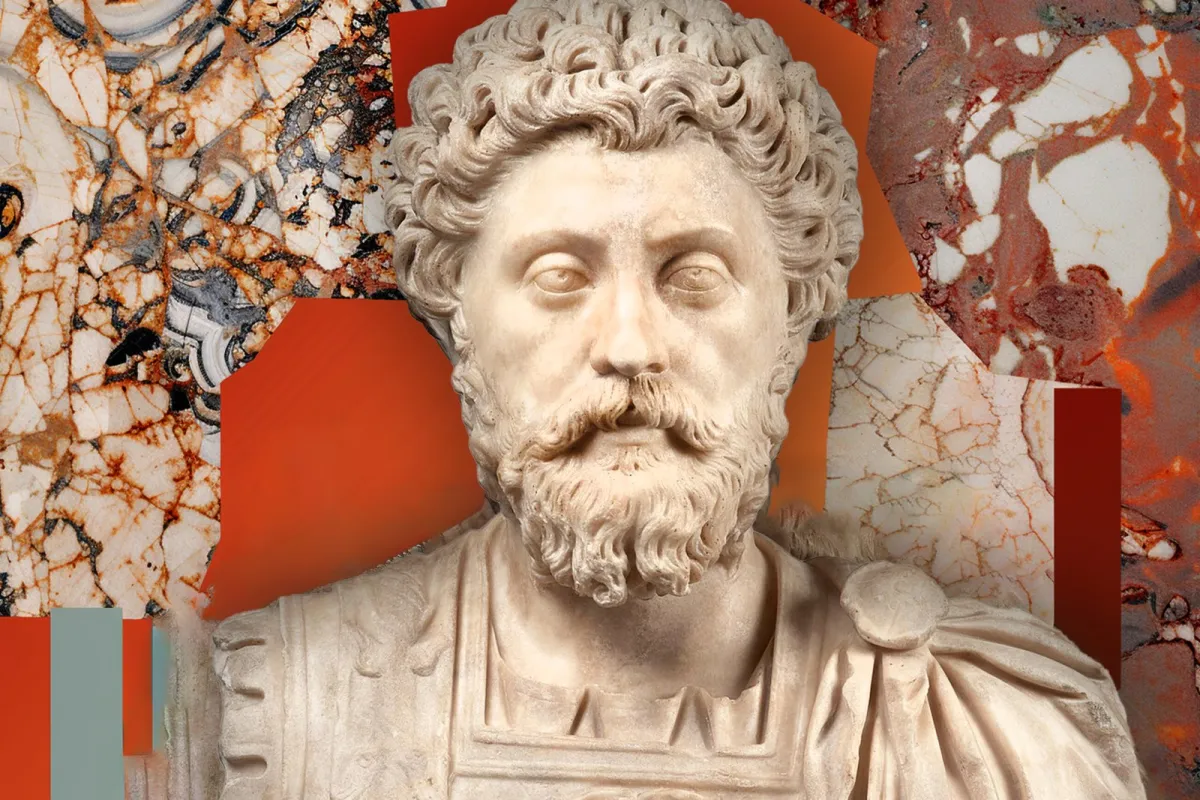 Photo: Marcus Aurelius, via www.culturefrontier.com
The self-help industry generates $13 billion annually by repackaging wisdom that Roman emperors were writing in their personal journals 2,000 years ago.
The Emperor's Private Notes Became Public Wisdom
Marcus Aurelius never intended to write a bestseller. His "Meditations" were personal reminders — notes to himself about how to live well while managing the stress of running an empire. When they were published after his death in 180 AD, they became the ancient world's most popular philosophy book.
The advice sounds remarkably familiar to anyone who's read modern self-help:
"You have power over your mind — not outside events. Realize this, and you will find strength."
"When you wake up in the morning, tell yourself: The people I deal with today will be meddling, ungrateful, arrogant, dishonest, jealous, and surly."
"The best revenge is not to be like your enemy."
These could be pulled from any contemporary mindfulness guide or productivity blog. Marcus Aurelius was essentially doing cognitive behavioral therapy on himself, 1,700 years before CBT was formally developed.
Medieval Monks Invented the Morning Routine
Jump forward to 420 AD, and a monk named John Cassian was writing detailed guides to what we now call "life optimization." His "Conferences" read like a medieval version of Tim Ferriss, complete with specific daily schedules, dietary recommendations, and mental exercises.
Cassian's monasteries followed rigid routines: wake at 3 AM for prayer, physical labor from sunrise to noon, intellectual work in the afternoon, communal meals at fixed times, bed by 8 PM. They practiced what modern productivity experts call "time blocking" and "batching similar tasks."
The monks even had a term for what we now call "decision fatigue" — they wore identical robes and ate the same meals to avoid wasting mental energy on trivial choices. Steve Jobs didn't invent the uniform; he just borrowed it from 5th-century ascetics.
Monastic libraries were filled with self-improvement manuals: guides to meditation, anger management, goal setting, and habit formation. The bestselling medieval text after the Bible was Thomas à Kempis's "The Imitation of Christ," which was essentially a 15th-century version of "The Purpose Driven Life."
Benjamin Franklin's 13-Week Transformation Program
By the 1700s, self-help had gone secular. Benjamin Franklin's autobiography includes a detailed description of his "moral improvement" system — a 13-week program for developing virtues like temperance, order, and industry.
 Photo: Benjamin Franklin, via www.cultura10.com
Franklin created charts to track his daily progress, rotated focus between different habits, and used what behavioral psychologists now call "implementation intentions" — specific if-then plans for maintaining good behaviors.
His approach was remarkably similar to modern habit-tracking apps: measure everything, focus on one change at a time, use visual feedback to maintain motivation. Franklin was essentially running personal experiments on behavior modification, complete with data collection and iterative improvements.
The autobiography became one of America's first bestsellers precisely because readers recognized the universal appeal of systematic self-improvement. Franklin had systematized what previous generations approached through religion or philosophy.
The Industrial Revolution Industrialized Wisdom
The 1800s saw the birth of the modern self-help industry. Samuel Smiles's "Self-Help" (1859) sold a quarter million copies by promising that anyone could improve their circumstances through personal effort. The book was basically a collection of biographical examples proving that discipline and perseverance led to success.
Dale Carnegie's "How to Win Friends and Influence People" (1936) became the template for modern self-help: take ancient wisdom about human nature, package it with contemporary examples, and present it as recently discovered insights. Carnegie was teaching social skills that Aristotle had analyzed in "Rhetoric" 2,300 years earlier, but he made it feel relevant to Depression-era Americans.
 Photo: Dale Carnegie, via studioassets.blob.core.windows.net
The pattern was established: every generation would rediscover the same core principles and believe they were the first to figure it out.
The Paperback Revolution and Psychological Rebranding
The 1960s and 70s saw an explosion of self-help publishing, driven by cheaper printing and growing interest in psychology. Books like "I'm OK, You're OK" and "Your Erroneous Zones" sold millions of copies by translating ancient Stoic principles into therapeutic language.
"Cognitive distortions" was just a clinical term for what Marcus Aurelius called "false judgments." "Positive self-talk" was what medieval monks called "interior prayer." "Goal visualization" was what Franklin called "moral imagination."
The advice hadn't changed, but the packaging made it feel scientific rather than spiritual. Americans who wouldn't read philosophy would buy psychology books that taught identical principles.
Today's Gurus Are Selling Ancient Wine in New Bottles
Modern bestsellers follow the same pattern. "The 7 Habits of Highly Effective People" is essentially Aristotelian virtue ethics with business school vocabulary. "Atomic Habits" repackages Aristotle's insights about how character is formed through repeated actions. "The Power of Now" is Buddhist mindfulness meditation without the religious context.
Even the newest trends are ancient revivals. "Biohacking" is just the Stoic practice of self-experimentation. "Digital minimalism" echoes monastic warnings about distraction. "Lifestyle design" is what philosophers have always called "the examined life."
The core insights about human flourishing haven't changed: focus on what you can control, develop consistent routines, maintain social connections, find meaningful work, practice gratitude, accept what you can't change. Every successful self-help book teaches some combination of these principles.
Why We Keep Forgetting What We Know
If the advice is so consistent, why does each generation need to rediscover it? The answer reveals something fundamental about human psychology: knowing what helps and actually doing it are completely different problems.
Reading Marcus Aurelius doesn't automatically make you disciplined any more than reading about exercise makes you fit. The value of self-help isn't the novelty of the insights — it's the motivation to apply insights you already know are true.
Each generation needs contemporary examples and language to make ancient wisdom feel relevant. Medieval monks couldn't relate to Roman emperors, but they could follow monastic rules. Modern Americans won't read Aristotle, but they'll buy books that translate his ethics into business terminology.
The self-help industry succeeds not by discovering new truths about human nature, but by helping people remember old truths in ways that inspire action. That's why the same advice keeps getting repackaged every few decades — not because the publishers are lazy, but because each generation needs to hear it in their own voice.
The real insight isn't that self-help is repetitive. It's that human nature is consistent enough that 2,000-year-old advice still works — we just keep forgetting to use it.