Diocletian Tried to Fix Prices by Royal Decree. It Went About As Well As You'd Expect.
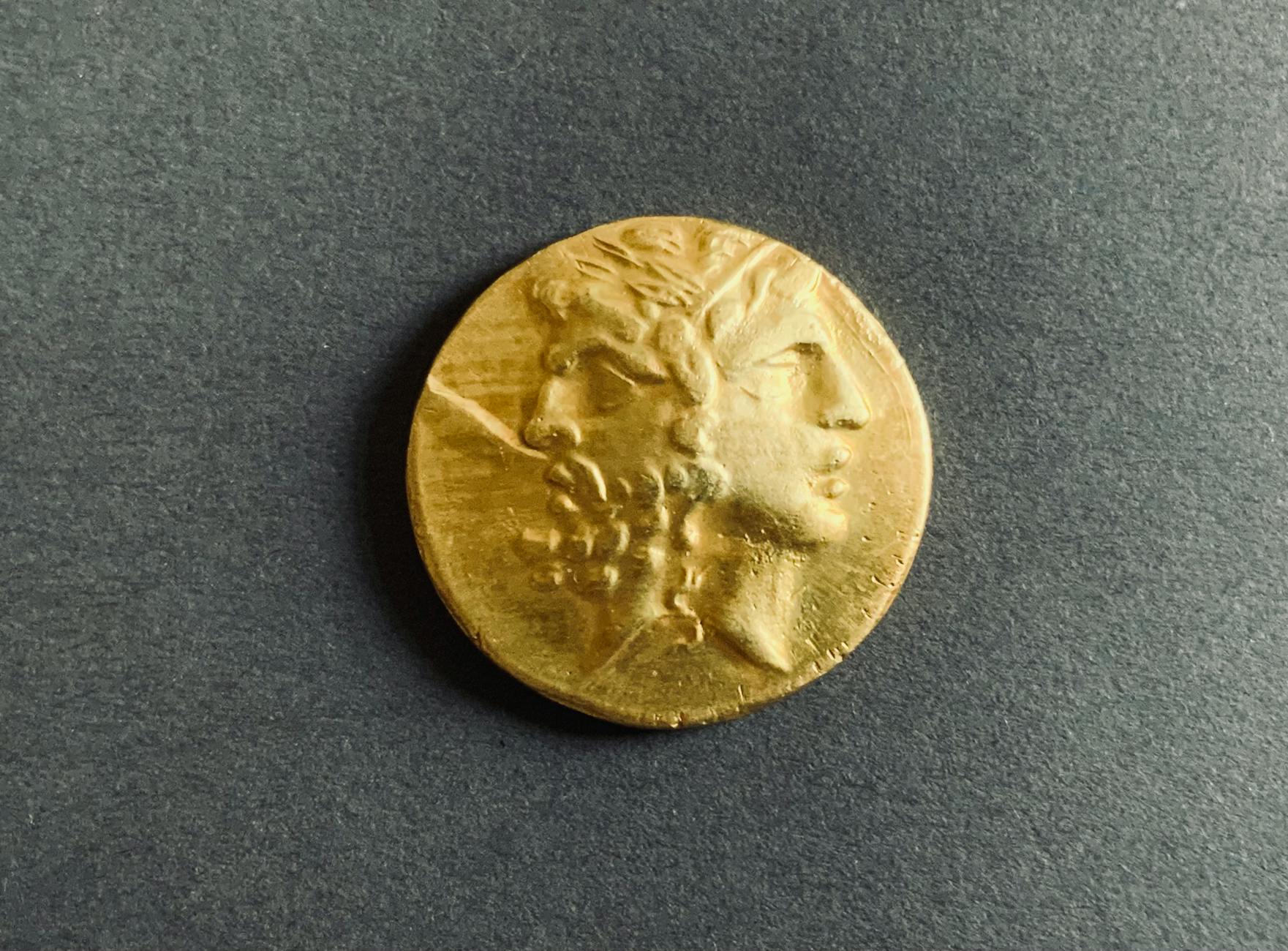
Diocletian Tried to Fix Prices by Royal Decree. It Went About As Well As You'd Expect.
There's a particular kind of political desperation that looks the same across millennia. A government watches prices spiral out of control, listens to citizens complain about the cost of bread, and eventually decides that the real problem isn't the underlying cause — it's the number on the tag. So it changes the number.
In 301 AD, the Roman Emperor Diocletian did exactly this. He issued the Edictum De Pretiis Rerum Venalium — the Edict on Maximum Prices — and had it carved into stone across the empire. It set legal ceilings on the price of over 1,000 goods and services, from wheat and wine to a haircut and a day's wages for a sewer cleaner. Merchants who charged more than the listed price faced execution. It was, by any measure, one of the most ambitious economic interventions in ancient history.
It collapsed within a few years. Goods vanished from markets. Merchants sold in secret. Barter economies sprang up. The historian Lactantius, writing shortly after, said the edict caused more shortages than it solved, and that it was eventually "abandoned" after much bloodshed.
If you followed American economic news between 2021 and 2024, some of this might sound familiar — not because any U.S. politician tried to execute grocery store owners, but because the psychology underneath the crisis is almost identical.
What Was Actually Happening to Roman Money
To understand why Diocletian's edict was doomed, you need to understand what had already happened to the Roman denarius by the time he issued it. Two centuries earlier, the denarius was roughly 85% silver. By Diocletian's reign, it had been debased to somewhere between 2% and 5% silver — essentially a bronze coin with a silver wash thin enough to wear off in your pocket.
This happened incrementally, the way these things always do. Each emperor facing a budget crunch — wars, plague, infrastructure — would shave a little more silver out of the coins and mint more of them. More coins chasing the same goods meant prices rose. Prices rising meant people demanded more coins. The cycle fed itself.
Diocletian understood this well enough to attempt his own monetary reform alongside the price controls — he introduced the argenteus, a new higher-purity silver coin. But he minted so many of the debased old coins simultaneously that the new ones were immediately hoarded. This is a near-perfect real-world demonstration of Gresham's Law — bad money drives out good — documented nearly 1,700 years before the economist Thomas Gresham formalized it.
The price edict was, in this context, an attempt to treat the symptom while the underlying disease ran unchecked.
The Psychology of "Money Doesn't Feel Real Anymore"
Here's where it gets interesting from a human behavior standpoint, because the economic mechanics are almost secondary to what was happening in people's heads.
Behavioral economists have a well-documented concept called money illusion — the tendency for people to think in nominal terms rather than real ones. When prices rise fast enough, money illusion breaks down. People stop trusting the currency as a reliable unit of account. They start pricing things in goods, in favors, in foreign coin — anything that feels more stable than the official tender.
This is exactly what happened in Rome. Papyri from Roman Egypt in this period show transactions increasingly denominated in grain or gold rather than denarii, even when the law required use of imperial coin. People weren't being irrational. They were responding rationally to a currency they'd learned not to trust.
Now consider the American post-pandemic moment. Between 2020 and 2022, the U.S. money supply (M2) increased by roughly 40% in two years — the fastest expansion in modern American history. Inflation peaked at around 9.1% in June 2022. And something interesting happened beyond the standard economic indicators: consumer sentiment collapsed far faster and further than the actual purchasing-power numbers alone would predict.
University of Michigan survey data from that period showed consumer confidence hitting lows not seen since the 2008 financial crisis, even as unemployment remained relatively low. People weren't just responding to prices — they were responding to the feeling that the numbers had stopped making sense. That prices on things they bought every week — eggs, gas, rent — were no longer predictable. That feeling is ancient. It precedes macroeconomics as a discipline by about 2,400 years.
What the Edict Actually Said
The surviving fragments of Diocletian's edict are remarkable documents. The preamble is worth reading not as history but as rhetoric, because it could have been written yesterday. Diocletian blamed "greed" — specifically the greed of merchants — for the inflation crisis. He described profiteers as "enemies of the human race." He framed the edict as a defense of the common soldier and the working poor against those who would exploit them.
The political logic is transparent and, again, familiar. Identify a villain (merchants, speculators, corporations) rather than acknowledge a systemic cause (currency debasement, supply disruption). Offer a visible, decisive intervention that signals control. Make the price of non-compliance severe enough to communicate seriousness.
What the edict could not do was change the underlying calculation merchants were making. If the legally mandated price for a good was below the merchant's cost to produce or acquire it, the rational choice was to stop selling it openly. So they did. The shortages Lactantius described weren't mysterious — they were the entirely predictable result of price controls applied to a supply chain already under strain.
Modern economists have a name for this outcome too: a deadweight loss, where transactions that would have benefited both parties simply don't happen because the legal price makes them impossible.
The Lesson That Isn't Really About Policy
It would be easy to turn this into a straightforward argument about price controls — that they don't work, that markets will find a way around them, that governments should focus on monetary fundamentals instead. And there's truth in that.
But the more durable lesson here isn't a policy prescription. It's a pattern of human response to economic instability that keeps recurring precisely because it's rooted in psychology rather than economics.
When money stops feeling trustworthy, people do three things consistently across history: they hoard whatever they perceive as stable (gold, grain, real estate, — in 2020-22, used cars and lumber), they lose trust in institutions they previously took for granted, and they become receptive to simple explanations that assign blame to a visible actor rather than a systemic cause.
Diocletian's subjects did all three. So, in varying degrees, did American consumers between 2020 and 2024. The Federal Reserve, which the average American barely thought about before 2021, became a topic of dinner-table conversation. Commodity hoarding spiked early in the pandemic. And the political appetite for blaming specific companies for inflation — a phenomenon economists call greedflation in its modern iteration — tracked almost perfectly with the historical Roman playbook.
None of this means the people responding this way are wrong or irrational. It means they're human, and humans in economic uncertainty have a consistent psychological profile that five thousand years of recorded history has documented pretty thoroughly.
Diocletian's stone tablets are still out there, if you know where to look. The prices he tried to fix are long irrelevant. The psychology that made him try is still running on the same hardware it always has.