A Monk Described Your Burnout in 420 AD. He Also Knew What Fixed It.
A Monk Described Your Burnout in 420 AD. He Also Knew What Fixed It.
At some point in the last few years, you have probably read or written something that goes roughly like this: I wake up tired, I go through the motions, nothing feels meaningful, I can't focus on anything important but I also can't rest, and I keep checking my phone because at least that feels like something. Maybe you called it burnout. Maybe you called it depression. Maybe you just called it Tuesday.
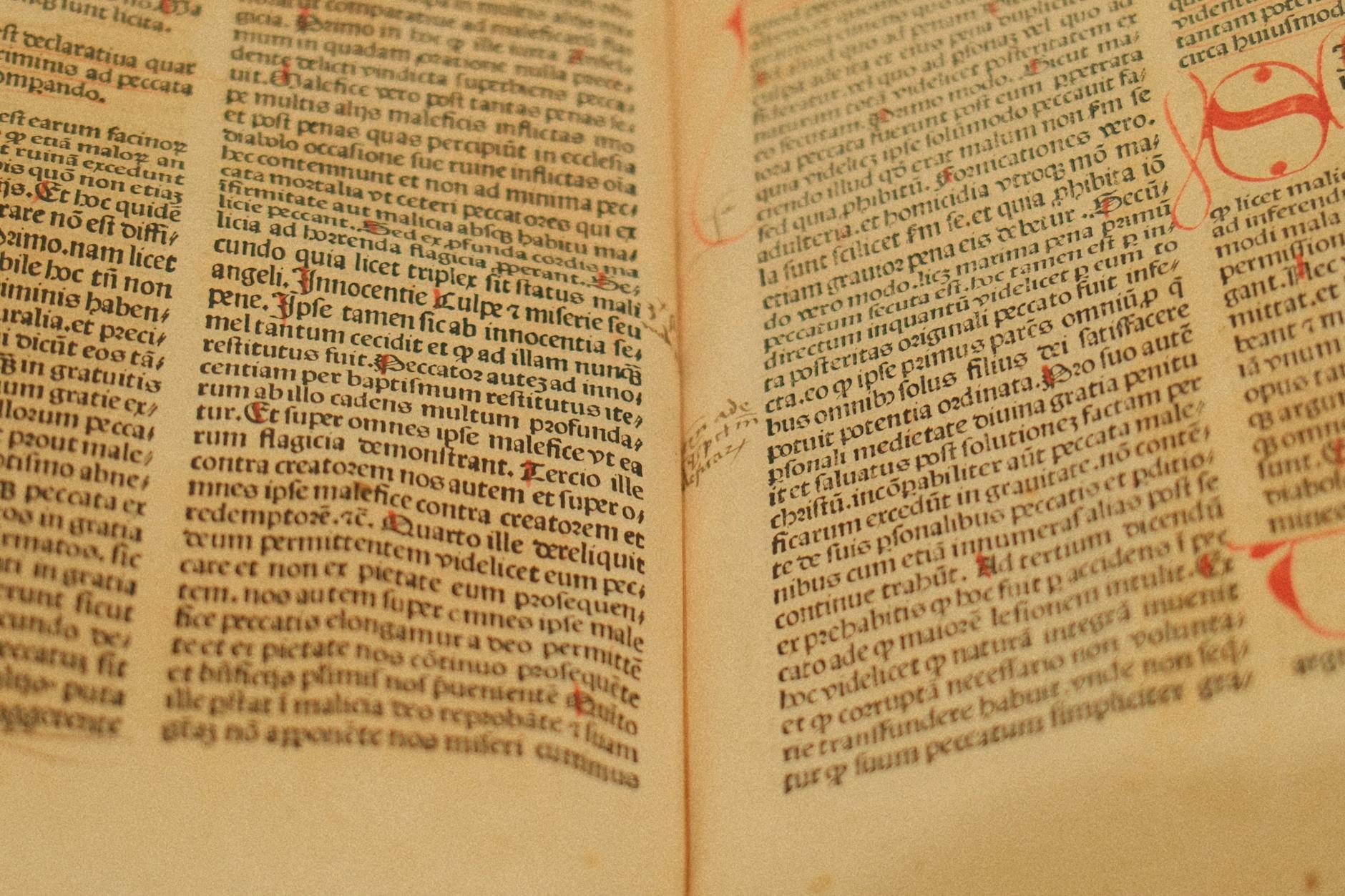
Here is a sentence written around 420 AD by a monk named John Cassian, describing what he called acedia: the afflicted person "looks about anxiously this way and that, and sighs that none of the brethren come to see him... he often goes in and out of his cell, and frequently gazes up at the sun, as if it was too slow in setting."
He's describing someone refreshing their inbox. He just didn't have that word.
The Noonday Demon
Cassian was a monk and theologian working in what is now southern France, and he had spent years in the desert monasteries of Egypt studying the psychology of contemplative life. The monks he observed and interviewed were, by any external measure, living lives of extraordinary simplicity — no career ladder, no commute, no mortgage. And they were falling apart.
Acedia — the word comes from the Greek for "lack of care" — was considered one of the eight great afflictions of the soul, a precursor to what later became the seven deadly sins (it eventually got folded into sloth, which is a catastrophic misclassification that erased most of its meaning). Cassian described it as a "weariness or distress of heart," a condition that struck reliably around midday, hence its other name: the noonday demon.
The symptom profile is striking in its specificity. The monk suffering from acedia couldn't concentrate on work. He felt that his cell — his home, his place of purpose — was intolerable and that life must be better somewhere else. He was exhausted but couldn't sleep. He was idle but couldn't rest. He felt that his efforts were pointless, that no progress was being made, that he was uniquely trapped while everyone around him seemed to be doing fine. He sought distraction compulsively, not because the distractions were satisfying, but because stillness had become unbearable.
If you've read any contemporary writing about burnout, you recognize every single item on that list.
Burnout Is Not a Product of Late Capitalism
The standard modern narrative about burnout locates its origins somewhere around the 1970s, ties it to neoliberal work culture, and implies that the solution is structural — shorter workweeks, better labor protections, dismantling the hustle-culture ideology. These are not unreasonable policy positions. But the historical record complicates the story considerably.
Cassian's monks were not being exploited by a corporation. They had voluntarily chosen lives of radical simplicity, prayer, and manual labor. Their days were structured, their needs were met, and their communities were small and supportive. By every metric of the contemporary burnout literature, they should have been fine. They were not fine.
The condition shows up across cultures and centuries in ways that don't map neatly onto economic systems. Renaissance scholars wrote about melancholia in terms that overlap substantially with acedia. Samuel Johnson described what sounds like a textbook case of burnout in his journals in the 1700s. Nineteenth-century physicians had a diagnosis called neurasthenia — nervous exhaustion — that was epidemic among educated professionals and was attributed to the unprecedented cognitive demands of modern life. Sound familiar? They thought they had invented it too.
The pattern across all these accounts suggests something the experimental psychology literature has been converging on independently: burnout is not primarily a response to overwork. It's a response to a specific combination of sustained cognitive demand, perceived meaninglessness, and the absence of recovery. You can hit all three conditions in a monastery, a medieval scriptorium, a nineteenth-century law office, or a 2024 open-plan workspace. The wrapper changes. The contents don't.
What Actually Helped
This is where history gets genuinely useful, because the people who wrote about these conditions across centuries weren't just complaining — they were also experimenting with treatments, and some of those treatments show up repeatedly in ways that suggest they were actually working.
Cassian's prescription for acedia was specific and counterintuitive: manual work. Not rest, not a change of scenery, not talking about your feelings — physical, repetitive, productive labor that engaged the hands and gave the mind something concrete to attach to. The monks who recovered from acedia were the ones who went back to weaving baskets or copying manuscripts, not the ones who took a break. The activity had to produce something real. Purposeless busyness made the condition worse.
This maps onto what contemporary researchers call "behavioral activation" — the finding that depression and burnout respond better to structured, meaningful activity than to passive rest. It also maps onto the consistent finding that the most burnout-resistant workers are not the ones with the lightest workloads, but the ones with the clearest sense of why their work matters.
The medieval and Renaissance physicians recommended what they called "change of air" — getting out of the environment associated with the work. This looks like what modern occupational psychologists call "psychological detachment," the ability to mentally disengage from work during off-hours. The change of air wasn't just metaphorical; physically leaving the space where the cognitive demand lived seemed to matter.
Across multiple traditions, there's also a consistent emphasis on social contact — not distraction or entertainment, but genuine connection with other people who understood what you were doing and why. Cassian is explicit that the monk suffering from acedia should seek out an elder, not for advice, but just to not be alone with the condition.
What We Keep Forgetting
Every generation that encounters burnout seems to go through the same three stages: first, the conviction that this is a new and uniquely modern problem; second, the search for a structural villain to blame it on; and third, the slow rediscovery of the same small set of things that actually help.
The five-thousand-year record doesn't offer a cure. Human beings living under sustained cognitive demand have always been vulnerable to this specific kind of collapse, and probably always will be. What the record offers instead is a corrective to the exhausting belief that you are uniquely broken, living in uniquely broken times, suffering from something that requires a uniquely modern solution.
You are not uniquely broken. John Cassian watched the same thing happen to some of the most disciplined, spiritually serious people of his era, in conditions that were specifically designed to prevent it, and he wrote it all down.
The noonday demon is very old. It has been described, named, studied, and — imperfectly, partially, with effort — managed. The tools are not glamorous. Meaningful work. Real rest. Other people. Knowing why it matters.
None of that fits on a listicle. It's also, as far as the record can tell, what actually works.